
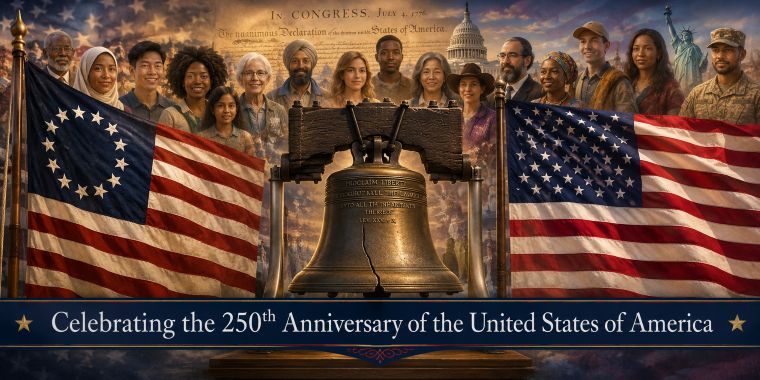
As we celebrate Independence Day in the United States, it’s worth pausing to look beyond the fireworks and flags to two of America’s most recognizable symbols — the Liberty Bell and the Statue of Liberty. Their inscriptions remind us that liberty is not just a moment in history but an ideal that each generation is called to uphold and a promise to fulfill.
The Liberty Bell, recast in 1753 by Philadelphia founders John Pass and John Stow, bears the words from Leviticus 25:10, emphasizing the enduring call for freedom and justice it represents.
“Proclaim Liberty Throughout All the Land Unto All the Inhabitants Thereof.”
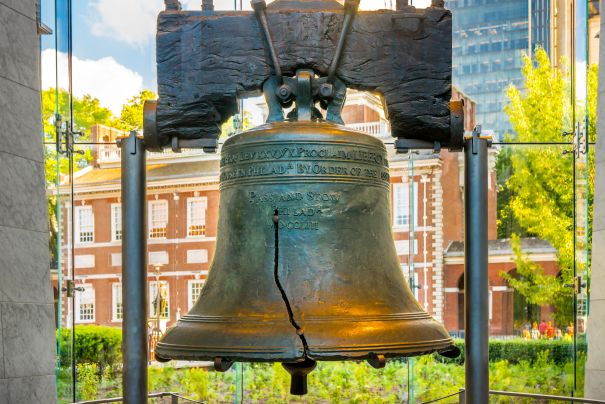
Originally chosen to commemorate the 50th anniversary of Pennsylvania’s Charter of Privileges, the verse speaks of the biblical Year of Jubilee — a time of freedom, restoration, and justice. Decades later, abolitionists embraced those words as a powerful call for the end of slavery in the hopes that the Liberty Bell would become a lasting symbol of freedom and equal dignity for all people.
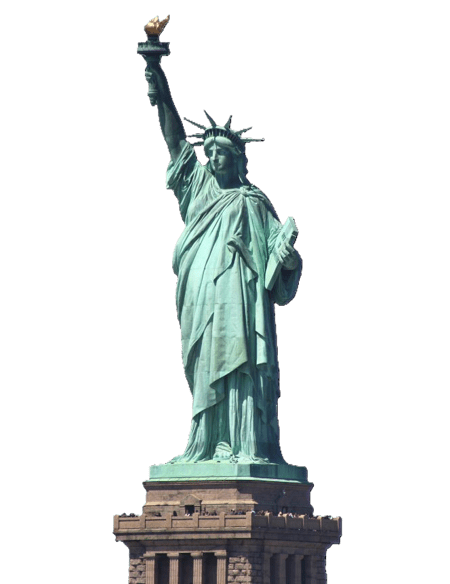
More than a century later, another extraordinary symbol of liberty arrived from across the Atlantic. The Statue of Liberty was conceived by French historian and abolitionist Édouard René de Laboulaye, who believed that America’s experiment in democracy could inspire the world. French sculptor Frédéric Auguste Bartholdi transformed that vision into the magnificent figure we know today, while engineer Gustave Eiffel designed the innovative iron framework that allows the statue to withstand the winds of New York Harbor. Dedicated in 1886, the statue was a gift from the people of France to the people of the United States, celebrating not only American independence but also the enduring friendship between two republics committed to the ideals of liberty.
That friendship was forged during the American Revolution. France provided desperately needed financial aid, weapons, troops, and naval support to the struggling American colonies. French officers, including the young Marquis de Lafayette, fought alongside General George Washington, and the decisive French naval victory at the Battle of the Chesapeake helped make the American victory at Yorktown possible. Without French assistance, the path to American independence would have been far more uncertain.
The Statue of Liberty is also forever linked with the words of Emma Lazarus’s poem, The New Colossus:
“Give me your tired, your poor, your huddled masses yearning to breathe free…”
Together, the Liberty Bell and the Statue of Liberty tell a remarkable story. One proclaims liberty throughout the land. The other lifts her torch as a beacon of hope to the world. Both remind us that America’s greatest strength has never been perfection, but the continual pursuit of a more just, more welcoming, and more united nation.
History has an extraordinary way of transforming relationships. The nation that fought a revolution against Great Britain eventually forged what has become one of the world’s closest diplomatic, economic, and military partnerships. Likewise, the friendship between the United States and France has endured through triumphs and disagreements, symbolizing our shared commitment to freedom and mutual respect across generations.
As we celebrate our nation’s 250th year, remember that liberty is an ongoing responsibility we all share—to protect, expand, and pass on to future generations.
Happy 250th Anniversary, United States of America!
Discover more from The Gryphonowl Chronicles
Subscribe to get the latest posts sent to your email.

You must be logged in to post a comment.